
School
Bullying
community.
Workplace
Bullying
Social
Smarts
School
Bullying
community.
Workplace
Bullying
Social
Smarts
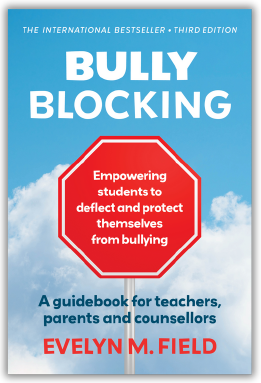
Bully Blocking: Empowering students to deflect
and protect themselves from bullying
A guidebook for teachers, parents and counsellors
By Evelyn M. Field
World-renowned, bullying expert, Evelyn M. Field OAM, provides a detailed understanding of bullying in schools and provides tips, strategies and exercises that teachers, parents and counsellors can practice to really understand the concept of bullying and help provide practical and accessible support.
This book will be an invaluable resource for parents, teachers, educators, and counsellors working with children who are at risk of or experiencing bullying.
Available Now | $39.95 RRP | Print and eBook
Available Education Suppliers, Amazon AU, Booktopia and other book retailers.
Evelyn M. Field, OAM
Psychologist, Author, Speaker
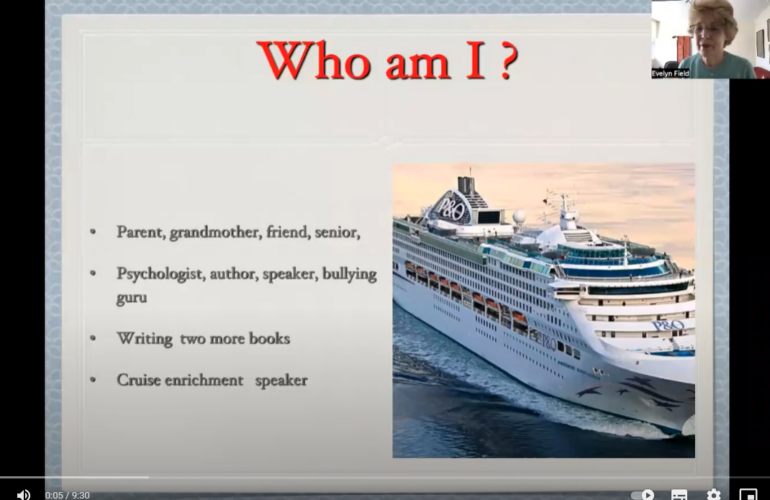
Hello, I’m Evelyn M Field, OAM. I’m a psychologist, professional speaker, bestselling author and regular media commentator.
I’ve spent over forty years helping students and adults develop social survival skills and manage school and workplace bullying.
My passion was recognised in the Australian Queens Birthday Honours, June 2014, “For service to the community, particularly though anti-school and workplace bullying initiatives.”
The key to managing bullying is understanding, knowing the causes, the organizational damage, the personal injuries and symptoms, as well as developing a variety of options and strategies to manage it more collaboratively and effectively.
The secret is understanding what bullying involves, why it happens, the personal injuries and organizational damage, as well as developing a variety of options and strategies to manage it. I hope that you can become empowered to manage bullying in a respectful, collaborative manner, while avoiding any adversarial behaviours.
I hope that my website has lots of information and resources to help you understand and manage school and workplace bullying.

Shop Products
Books & Products
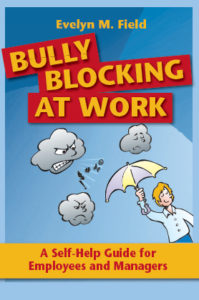
Bullying Blocking at Work
A Self-Help Guide for Employers and Managers by Evelyn M. Field
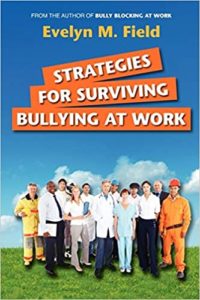
Strategies for Surviving Bullying at Work (2011)
Now you can do something about it.

Harry the Bully Blocker
An empowering and effective tool to guide your children through dealing with bullies.
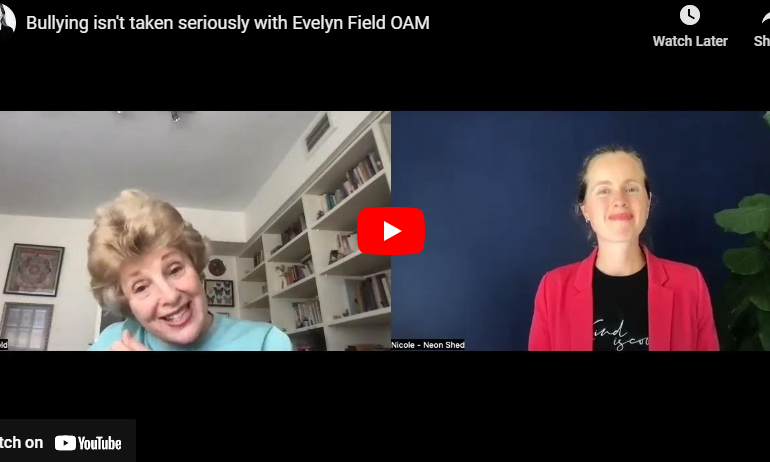

[/vc_section]